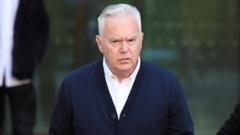
Channel 4 is facing further criticism and calls to pull a documentary about disgraced former BBC newsreader Huw Edwards ahead of its broadcast on Tuesday.
Education Secretary Lucy Powell said it was “deeply disappointing” the channel had chosen to broadcast the documentary, while victim’s rights campaigner Dame Jasvinder Sanghera said it was “totally irresponsible”.
Meanwhile, survivors of child sexual abuse and members of the broadcast Union Bectu have written an open letter calling for the broadcaster to cancel the programme.
Channel 4 has previously defended the documentary, Huw Edwards – Guilty, on the grounds of public interest. The broadcaster declined to comment further on Sunday.
Edwards, who had been the BBC’s most senior news presenter, was given a suspended six-month prison sentence in July 2024 after pleading guilty to three counts of making indecent images of children.
He admitted having 41 indecent images – including seven of the most serious category, with one video showing a victim aged between seven and nine years old.
Channel 4’s documentary follows the presenter over the course of a year as he navigates life in rural Wales in the wake of his conviction.
Speaking to Sky News on Sunday, Powell said she would not be watching it and that the public had “heard enough” from Edwards.
She added the programme would be “incredibly distressing for victims” and broadcasters “should be really cognisant of that when they take these decisions to make these kind of programmes”.
Dame Sanghera told BBC Radio 4’s Broadcasting House programme on Sunday it was “troubling”.
“He has the right to tell his story, but that doesn’t mean the public must accept his interpretation of events, nor should it come at the expense of recognising the victims,” she said.
Dame Sanghera, an independent survivor advocate for victims of Mohamed Al Fayed, said giving perpetrators such visibility can have a huge impact on survivors of abuse.
“The triggering of seeing that person’s face on the television brings them back to the real events that happened to them.”
Meanwhile, a group of charities for survivors of sexual abuse and the broadcasting union Bectu called on Channel 4 to pull the documentary.
In an open letter, they said the documentary was “deeply distressing and an insult to every survivor in the UK carrying the trauma of these crimes”.
“While we struggle every day to be heard, believed and accurately represented in the media, a convicted offender is given a platform to trivialise and justify his abuse,” the letter says.
Viv Gordon, artistic director of a survivor-led arts organisation that was among the letter’s signatories, told the BBC this was a moment for “institutional accountability”.
She went on to say: “We want to see radical and courageous programming choices that support positive change and centre survivor voices.”