Chronic under-investment
In Buenaventura alone, some 540 homes have collapsed and 3,416 sustained damage. Some 330 residents were injured.
But at the Luis Ablanque de la Plata District Hospital, several wards have been out of operation following the earthquake.
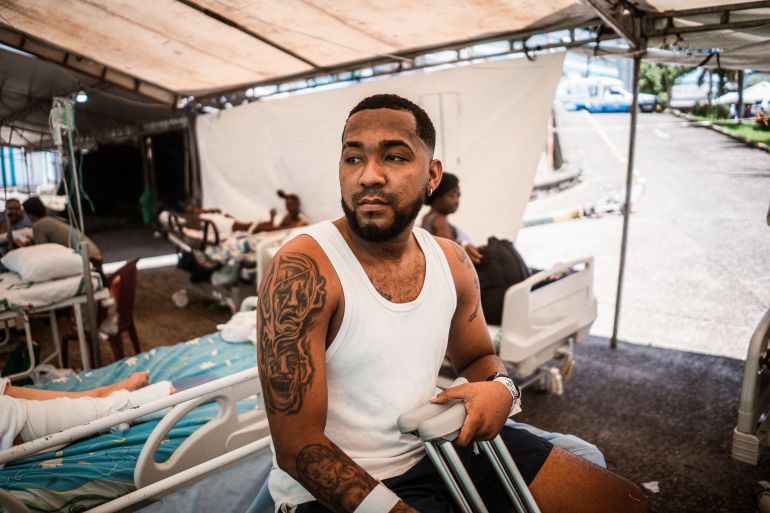
The injured lie by the dozens in beds under tents outside in the hospital’s sweltering car park, waiting to be treated for a range of breaks and tears sustained in the disaster.
Bryan Reyes, 29, sustained three fractures in his leg after jumping out of a first-floor window to escape the earthquake.
A shipyard worker who carries cargo for a living, he called the earthquake response evidence of Buenaventura’s long history of institutional neglect.
“It is a total abandonment. It’s like the people here just don’t matter,” he said.
Reyes pointed to the lack of resources at the hospital. The limited supplies, he explained, are a symptom of chronic under-investment.
“Before the earthquake struck, there was a strike at the hospital because the workers hadn’t been paid,” Reyes said. “There are never any supplies; they don’t pay the doctors or specialists.”

Buenaventura has historically lagged in socioeconomic development compared with other urban hubs like Cali, which is located in the same department.
According to government estimates from 2024, 15.4 percent of the city’s population lives in multidimensional poverty, a term that economists use to capture deprivation beyond dollar amounts.
Multidimensional poverty includes factors like a lack of access to education, healthcare and other basic public infrastructure.
Buenaventura has more than double the rate of multidimensional poverty as Cali, where 6.7 percent of residents experience that issue.
In 2025, the civic monitoring group Buenaventura Como Vamos (BCV) also found that 72 percent of residents struggled to find work.
Approximately 70 percent reported having to eat fewer than three meals a day due to insufficient food.
The city also has a relatively high Afro-Colombian population, a minority ethnic group that has been historically marginalised. Some 88.5 percent of the city identifies as being of African descent.