Authors, publishers sue Google over alleged AI copyright infringement
Hachette and Elsevier lead US legal action against Google, alleging misuse of books for Gemini AI model training.
Save

Published On 15 Jul 202615 Jul 2026
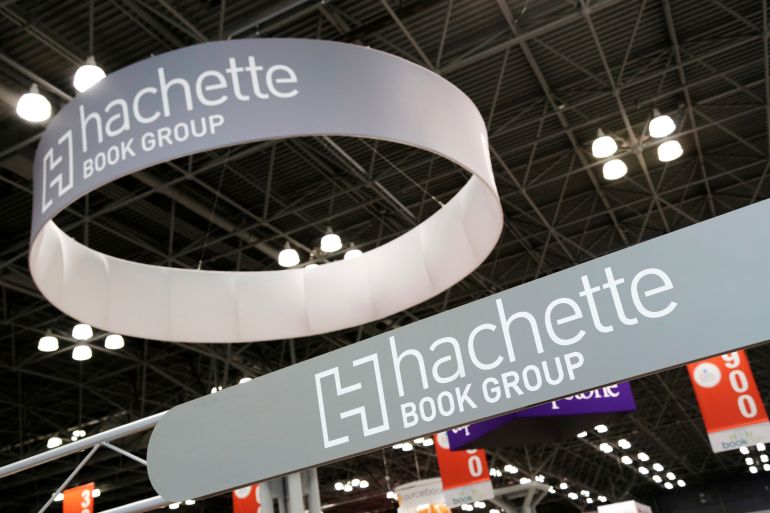
Hachette Book Group, Cengage Learning, Elsevier, and author Scott Turow have filed a lawsuit against Google in a federal United States court in New York, alleging the Silicon Valley tech giant committed copyright infringement while training its Gemini AI models.
“Google willfully sidestepped this longstanding system designed to protect copyrights and compensate authors and publishers through a series of deliberate choices to develop Gemini1,” the nearly 60-page complaint filed on Friday said.
Recommended Stories
list of 4 itemsend of list
The case alleges that Google first copied books as source material through Google Books, claiming that the company used books it “obtained for strictly limited purposes in connection with Google Books and other Google services”. It also alleges that Google “downloaded web scrapes of virtually the entire internet, including from known pirate sources and from behind legitimate paywalls”.
It further alleges that Google copied those works without permission to train its AI models and continues to do so, despite those uses allegedly falling outside the scope of existing agreements.
The suit claims the company was fully aware of the legal risks, alleging that internal documents warned using books to train AI models was “highly problematic for Google,” and could lead to as much as $100bn in fines.
“At no point did Google inform authors and publishers that Google was copying their works as source material to develop and train AI models,” the suit alleges.
“The idea, in short, is that any fair use [a legal doctrine that allows limited use of copyrighted material without permission for purposes like reporting, education, and research in a limited scope] argument that Gemini has would arguably be mooted by the fact that they allegedly acquired the books unlawfully,” Kirk Sigmon, founding partner who looks at technology and IP law at KellDann Law, told Al Jazeera. “It’s an interesting issue that has a lot of complex dimensions, in no small part because it can be hard to prove what was or wasn’t in a training corpus.”
Advertisement
The suit follows a previous attempt by Hachette Book Group and Cengage in February to join a pre-existing class action lawsuit originally brought by a group of authors in 2023.
“The scope of the complaint underscores that authors and publishers are united in the goal of protecting their valuable intellectual property rights in works of fiction, nonfiction, children’s books, memoirs, and poetry, as well as educational works and scholarly articles that span thousands of subject areas and research developments,” Hachette said in a statement following the complaint.
Google did not respond to Al Jazeera’s request for comment.
A wave of lawsuits
It is far from the first lawsuit brought against an AI company by authors and book publishers over alleged copyright infringement.
There is also a pending lawsuit against OpenAI brought by authors including George RR Martin, author of Game of Thrones, and the Authors Guild. In October, a federal judge denied OpenAI’s attempt to dismiss the case.
However, a different lawsuit brought by a group of authors against Meta did not go in the authors’ favour. In 2025, a group of authors led by Richard Kadrey alleged that Facebook and Instagram’s parent company used copyrighted books to train its AI models. A federal judge ruled that the AI training met the legal requirements for “fair use”.
“They [the copyright lawsuits] all typically follow the same road map,” Michael Goodyear, associate professor at New York Law School, told Al Jazeera.
“The basic claims are you took copyrighted works and used them for training. These were unlawful copies, that’s the training argument. Some also more explicitly make arguments about infringing output.”
But Oli Huggins, CEO of ExpertEdge and VP of Partnerships at Packt Publishing — a publisher whose titles have been used in an Anthropic piracy case and who told Al Jazeera he has been approached by AI companies seeking to pay to train on the company’s data — said the challenge is that once information is used for training, it is difficult to prove whether an output constitutes copyright infringement.
“Proving what happened inside a model is another fundamental difficulty. Once the egg is baked into the cake, it is extremely difficult to identify it, quantify its contribution or prove precisely which copy of a book was used. A model may reveal familiarity with a work without reproducing enough verbatim text to establish the evidentiary trail a claimant needs,” Huggins told Al Jazeera.
Huggins said the licensing offers currently being made are not sustainable for publishers.
Advertisement
“The economics remain deeply unattractive. Offers currently circulating can value a perpetual AI-training licence at roughly $10 per title.”
There is a wave of lawsuits across content-driven industries, including news and music, against AI companies over alleged copyright infringement as well.
CNN filed a lawsuit against Perplexity, alleging the company illegally copied more than 17,000 stories to train its models, which generated content that was “identical or substantially similar to CNN’s content”, according to the complaint filed in May.
Last week, 17 news organisations, including The New York Times, accused OpenAI of withholding evidence in a case originally brought by the newspaper in 2023, alleging the Sam Altman-led AI company committed copyright infringement while training ChatGPT.
In the music sector, Hagens Berman, a prominent class action law firm, filed a class action lawsuit against AI music generator Suno, alleging it trained its models on independent musicians’ work without their consent.
In January, Universal Music Group sued Anthropic, alleging the Dario Amodei-led company committed copyright infringement by using 20,000 songs to train its Claude model without permission.
But there are still looming questions about who is ultimately responsible for reproduced material that appears to be copied, according to Goodyear, that the courts have yet to answer.
“If the user is actively trying to get the model to infringe, that could mean the user is ultimately on the hook rather than the AI system,” Goodyear said. “This is still an open question that courts in the United States haven’t really grappled with.”