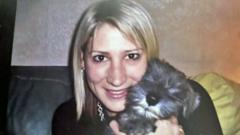
An inquest in the UK later found that Rebekah’s organs had been inexplicably “chopped up” into small pieces by a pathologist in Barbados.
This served no medical purpose and destroyed vital evidence, according to a UK pathologist who examined her body after it had been repatriated.
The inquest also established that key toxicology and histology tests – to look for signs of disease, injury or other changes in the body – were not conducted.
The coroner, Andrew Harris, said this raised the prospect of “deliberate concealment or obstruction of further investigation”.
He also said that while bloodstains on bedclothes may be consistent with vomiting, he could not accept the cause of death determined by Barbadian authorities, aspiration pneumonitis – inflammation of the lungs – and delivered an open verdict.
He concluded that Rebekah’s death likely involved intoxication and said unlawful killing could not be ruled out.
The inquest did not, however, consider Arter’s alleged sexual exploitation of several other women whose cases he had investigated, to be within its scope.
Police in Barbados have previously said no marks of violence were found on Rebekah’s body and there was nothing to suggest anything untoward – adding that they did not order toxicology tests because they believed she died from natural causes.
A week after Rebekah died, Arter flew back to the UK where he was arrested at Heathrow in connection with alleged sexual offences against another woman whose case he had investigated as a police officer in 2010. He was found dead in Wandsworth prison three days later.
In response to the BBC, Metropolitan Police Commander Simon Messinger said: “Our thoughts at this time remain with Rebekah Arter’s family, who understandably have questions about the circumstances of her death.
“We would urge any victim survivors of rape and sexual offences – no matter how long ago a crime may have occurred – to reach out.”
Elliot says his two young children will never know their grandmother.
“My daughter, my son – they’re never gonna actually have any memories of her,” he says.
“For the rest of my life, I’m never going to know how she’s passed away.”
If you have more information about this story, you can reach Noel directly and securely through encrypted messaging app Signal on: +44 7809 334720, by email at noel.titheradge@bbc.co.uk