Is the US really preparing to drop Israel?
With relations between Israel and the US fraught, some are speculating if the real special relationship may be at an end
Save

 By Simon Speakman CordallPublished On 6 Jul 20266 Jul 2026
For many in Israel, it appears inevitable that US President Donald Trump will re-evaluate Washington’s ties with Israel, an alliance that has helped sustain the Israeli military since its formation in 1948 from a myriad of Zionist militias.
Currently, Israeli Prime Minister Benjamin Netanyahu is embarked on a hazardous course for his political survival, potentially facing prison due to his ongoing corruption charges and a general election that could throw him out of office later this year.
Recommended Stories
list of 4 itemsend of list
Between Washington’s need to secure an agreement with Iran that includes Lebanon – which Israel has been bombing since 2023 – and the Israeli public’s desire to see that war continuing, Netanyahu is faced with one of the most challenging periods in his four-decade political career.
After reports of frictions between the US and Iran during the previous war on Iran in June 2025, a year later relations appear to have deteriorated further due to disagreements on how to proceed with Tehran.
Iran has made the end of Israel’s war in southern Lebanon a key demand in its negotiations with Washington on an eventual peace deal between the two countries, setting the US and Israel on course for major disagreements.
Last month, an alleged leak of a phone call—not denied by the White House—saw Trump, apparently desperate to end the war with Iran, berate Netanyahu for refusing to halt attacks on Lebanon.
Trump reportedly called Netanyahu “crazy” and accused him of ingratitude, telling him that he would already be in jail if it had not been for the president’s intervention. “Everybody hates you now. Everybody hates Israel because of this,” he allegedly told Netanyahu.
Advertisement
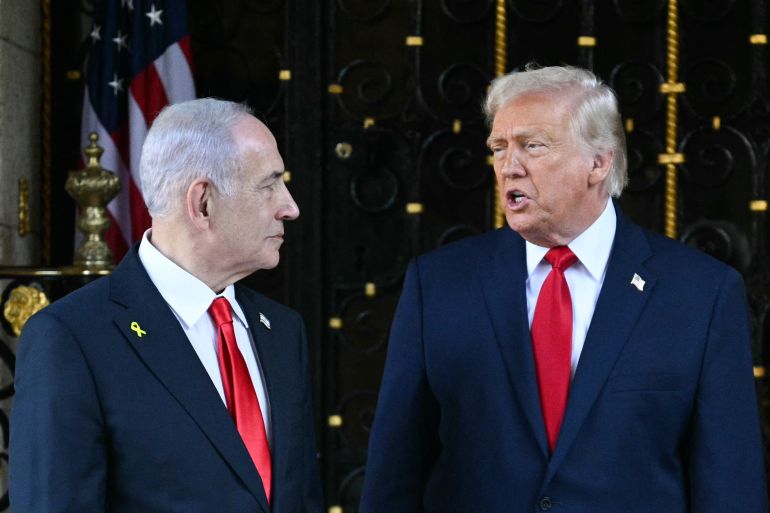
In an interview with Axios last week, Trump said that Netanyahu “knows who the boss is” – an admission that relations between the two leaders are tense.
In a media conference in June, JD Vance described Trump as the only world leader presently sympathetic to Israel. He also pointedly warned Israeli ministers criticising the prospective US-Iran deal that “two-thirds of the defensive weapons that have protected [their] homeland have been built by American hands and paid for by American tax dollars”.
Trouble in MAGA-land
Recent polls show that not only is the US public turning against Israel, but there is also strong scepticism among certain sections of Trump’s right-wing populist ‘Make America Great Again’ (MAGA) movement.
Defectors from MAGA, such as high-profile loyalist Marjorie Taylor Greene, have been unsparing in their criticism of US support for Israel. Among the most vocal critics in the right-wing political sphere is former television host Tucker Carlson, who in late June said Trump had finally realised that Israel marked the greatest threat to his administration.
Opening his podcast, Carlson accused Israel of having “cajoled, convinced, threatened” Trump into attacking Iran as a pretext to launch “another war against a neighbour, Lebanon”.

Daniel Byman, of the Centre for Strategic and International Studies (CSIS) and a professor at Georgetown University in Washington, said that while Trump heads traditionally the most pro-Israel party in the US establishment, the Republicans, he also has options in dealing with Israel.
“I believe President Trump has considerable flexibility. Although many Republicans are staunchly pro-Israel, the president has a very loyal base and has shown he can bring the vast majority of his party with him,” Byman told Al Jazeera. “In this he would be joined by many Democrats — the party is increasingly critical of Israel.”
Few in Israel are unaware of the importance of the US diplomatic and military support for the country throughout its history. Since 2016, Israel has benefitted from a memorandum of understanding granting $38bn in military assistance over a 10-year period – the largest-ever agreement between the US and another country.
US diplomatic support has also been crucial to Israel during its globally unpopular genocidal war in Gaza, which has killed at least 72,000 Palestinians since October 7, 2023. Washington has deployed its UN veto no less than six times in support of Israel in UN debates on the issue.
Advertisement
Political dependence
During the build-up to Israel’s general election, many of Netanyahu’s political opponents made much of their country’s rift with the US and growing international isolation, despite a majority of them having backed Israel’s wars in the region which led to this diplomatic crisis.
In mid-June, former prime minister and leader of the opposition, Yair Lapid, intensified his criticism of Netanyahu’s apparent failure to keep Israel’s primary ally on side.
“If we don’t quickly replace this government, Israel’s foreign relations will be wiped out,” he wrote on X.
Gadi Eisenkot, the former Chief of Staff of the Israeli military and who is most likely to oust Netanyahu in this year’s election, has been no less critical of the prime minister’s handling of foreign relations.
Eisenkot recently accused Netanyahu of mishandling the situation so badly that it had pushed Trump to go it alone and seek a deal with Iran, further isolating Israel from its number one ally.

“The US is really the hinge that guarantees Israel’s place in the world,” said Israeli political analyst Nimrod Flaschenberg. “The US is everything to Israel – it provides it [with] defence, technology, diplomatic standing—everything.”
American author and former diplomat Aaron David Miller noted that while Trump is not the first US president to clash with Israel, few have done it so publicly.
“[But] no US president or vice president has spoken in the terms of the current administration, or leaked discussions with their Israeli counterpart in which they are diminished and discredited,” he said. “Israel has never been more unpopular with Congress or the public, both Republican and Democrat voters.”
Yet despite the tensions, there is no indication that the Trump administration is considering a clean break with Israel.
“If Trump were to bring serious pressure on Israel it would have to be in pursuit of a significant breakthrough that would make him look good,” Miller said.
“There’s no issue out there – not Lebanon; Gaza; Israeli-Saudi normalisation that’s close to a breakthrough that would warrant sustained pressure on Israel.”