EU leaders reject military involvement in Strait of Hormuz amid war on Iran
Pushback comes as US President Donald Trump says NATO allies should help secure key waterway amid soaring oil prices.


Published On 16 Mar 202616 Mar 2026
Save
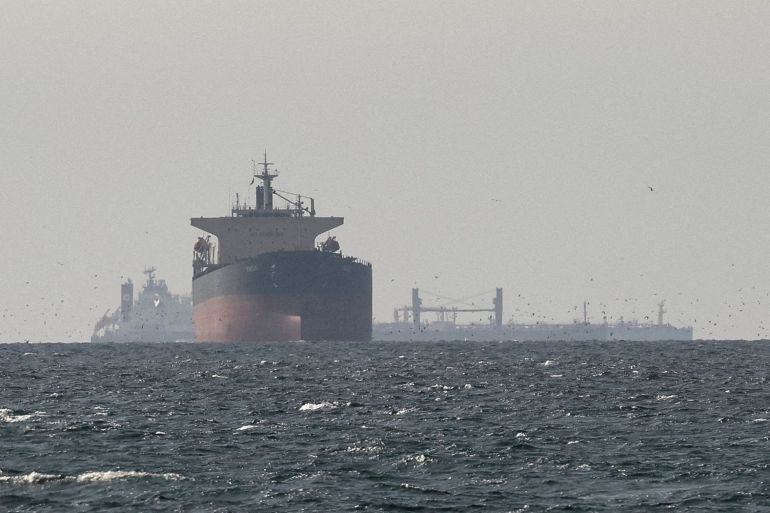
European leaders have rejected demands by United States President Donald Trump to help ensure freedom of navigation in the Strait of Hormuz as foreign ministers from the European Union gathered in Brussels to discuss skyrocketing oil prices during the US-Israeli war on Iran.
German Foreign Minister Johann Wadephul on Monday said Berlin had no intention of joining military operations during the conflict.
Recommended Stories
list of 3 itemsend of list
“We expect from the US and Israel to inform us, to include us into what they’re doing there and to tell us if these goals are achieved,” he told reporters before the meeting in Brussels.
“Once we have a clear picture of that, we believe we need to move into the next phase, namely, defining a security architecture for this entire region, together with the neighbouring states,” he said.
Wadephul added that NATO had not made any decision on assuming responsibilities in the Strait of Hormuz after Trump on Sunday called for a naval coalition to deploy warships to secure the key Gulf waterway, through which about one-fifth of the world’s oil shipments transit.
The strait has essentially been shuttered as a result of the war, which has seen the US and Israel launch deadly attacks across Iran since February 28. Iran has retaliated by firing missiles and drones across the wider Middle East, roiling global energy markets.
Trump’s call for countries to secure the waterway has been met with pushback from several European countries despite the soaring oil and gas prices.
Greek government spokesman Pavlos Marinakis said on Monday that Greece would not engage in any military operations in the Strait of Hormuz while Italian Foreign Minister Antonio Tajani said Italy was not involved in any naval missions that could be extended to the area.
Advertisement
Danish Foreign Minister Lars Lokke Rasmussen said, however, that Europe should keep an open mind on helping to ensure freedom of navigation in the strait even if the continent did not support the US-Israeli decision to go to war with Iran.
“We must face the world as it is, not as we want it to be,” Rasmussen said, adding that the EU must decide on a plan “with a view towards de-escalation”.
Meanwhile, the United Kingdom said it was working on a collective plan to reopen the Strait of Hormuz and restore freedom of navigation in the Middle East but doing so would not be easy.
EU feels Trump’s pressure
EU foreign policy chief Kaja Kallas told reporters before the meeting in Brussels that the bloc’s leaders would focus on how the EU could contribute to reopening the waterway.
“We first need to discuss what the member states are willing to do in the Strait of Hormuz,” she said. “Of course, the needs to open the Strait of Hormuz are there right now.”
Kallas said the strait’s closure, which has sent oil prices to more than $100 a barrel, was benefitting Russia’s war on Ukraine, which is largely funded by Moscow’s energy revenues.
Reporting from Brussels, Al Jazeera’s Step Vaessen said what was clear is that European leaders are “increasingly feeling the pressure from Trump to help him reopen the Strait of Hormuz”.
“There is very little appetite [on the part of EU leaders] for joining the war, especially because they feel left out of the loop,” Vaessen said. “They will be discussing a way to reopen the Strait of Hormuz, but that doesn’t necessarily mean sending warships.”
In an interview with the Financial Times on Sunday, Trump said NATO faced a “very bad” future if his proposal for a military operation in the strait received no response or a negative one.
France has suggested the EU could expand its Aspides mission, a small naval mission established in 2024 to protect ships from attacks by Yemen’s Houthis in the Red Sea.
It currently has an Italian and a Greek ship under its direct command and may also call upon a French ship and another Italian vessel for support.
But Germany has been among the EU members to express scepticism of the idea.
“What does … Trump expect a handful or two handfuls of European frigates to do in the Strait of Hormuz that the powerful US Navy cannot do?” German Defence Minister Boris Pistorius said in Berlin. “This is not our war. We have not started it.”
Asked about Trump’s comments on the future of NATO, Pistorius said he did not anticipate the alliance to fall apart over the issue.
Advertisement