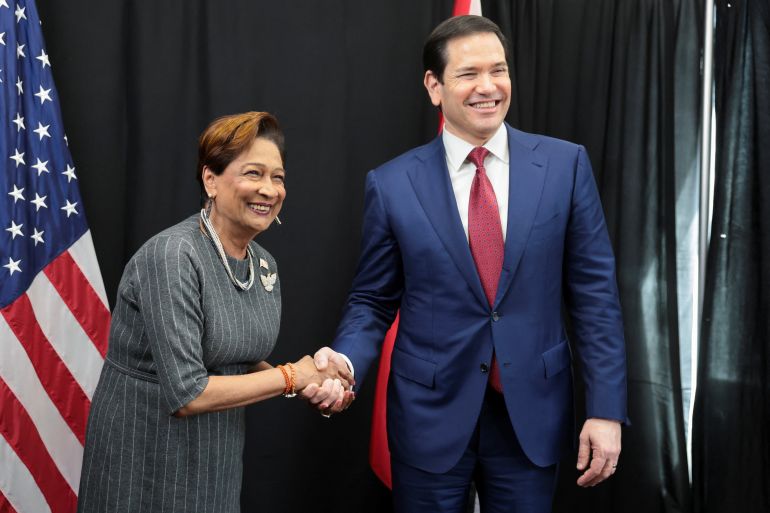
Trinidad and Tobago extends state of emergency for another three months
The Caribbean nation has spent 10 of the last 14 months under an emergency status that curtails key civil liberties.


Published On 14 Mar 202614 Mar 2026
Save
As part of a campaign to crack down on crime, the Caribbean nation of Trinidad and Tobago has moved to extend its state of emergency, which grants security forces expansive powers and restricts key civil liberties.
The country’s House of Representatives voted on Saturday to extend the emergency measures for another three months.
Recommended Stories
list of 3 itemsend of list
The three-month extension passed by a margin of 26-12. The state of emergency was initially enacted for a period of 15 days, but the government can stretch it further if it so chooses.
Members of the opposition say that, despite the emergency state, the government has failed to bring violent crime under control.
Trinidad and Tobago has now been under a state of emergency for about 10 of the last 14 months.
A state of emergency was first declared in December 2024, following an outburst of gang violence.
It allowed the government to arrest people on “suspicion of criminal activities” and suspended protections against government searches of public and private premises.
The country has recorded more than 60 killings this year. Prime Minister Kamla Persad-Bissessar recently told the legislature that 373 people have been detained under the state of emergency.
The vote extends a trend of governments across Latin America relying on emergency orders to address crime in their countries.
Countries including El Salvador and Honduras have issued such emergency declarations to pause civil liberties and empower security forces to combat crime, despite a record of mixed success.
Advertisement
Both El Salvador and Honduras have also prolonged their states of emergency, even though such measures are designed to be temporary.
Last year, the United Nations High Commissioner for Human Rights called on the Honduran government to end its state of emergency, noting that it had been extended approximately 17 times.
Activists and human rights experts have also indicated that emergency declarations can sometimes pave the way for severe rights abuses.
During an event this week on the sidelines of the UN Human Rights Council, a group of international jurists presented findings that the government of Salvadoran President Nayib Bukele likely committed crimes against humanity during the government’s state of exception.
Activist groups have said the government in El Salvador is using extensive powers to threaten and jail dissidents and rights activists. The country is slated to mark the fourth anniversary of its 2022 state of emergency on March 27.