Japan to restart world’s biggest nuclear plant after 15-year shutdown
Petition signed by 40,000 relays concerns over risk of seismic activity in vicinity of Kashiwazaki-Kariwa plant.

 By Al Jazeera StaffPublished On 21 Jan 202621 Jan 2026
Save
Japan is set to restart the world’s largest nuclear power plant as it turns back to the energy source a decade and a half after the Fukushima disaster prompted a nationwide shutdown of reactors.
Tokyo Electric Power Co (TEPCO) said on Wednesday that it was “proceeding with preparations” and aimed to restart operations at the Kashiwazaki-Kariwa plant in Niigata province at 7pm (10:00 GMT). However, safety concerns persist.
Recommended Stories
list of 3 itemsend of list
The nation’s trust in its nuclear energy infrastructure was destroyed by the 2011 triple meltdown at Fukushima, which was run by TEPCO, following a colossal earthquake and tsunami.
Just one reactor of the seven at Kashiwazaki-Kariwa will be restarted on Wednesday. When fully operational, the plant will generate 8.2 gigawatts of electricity, enough to power millions of households.
The plant is spread over 4.2sq km (1.6sq miles) of land in Niigata, on the coast of the Japan Sea.
Japan, which has suffered setbacks in its offshore wind rollout, is switching its focus back to nuclear power to strengthen energy security and reduce reliance on imported fossil fuels.
Kashiwazaki-Kariwa is the 15th plant to be restarted out of 33 that remain operable. Japan shut down all its 54 reactors in the wake of the 2011 disaster.
As well as restarting those plants that are possible to revive, Prime Minister Sanae Takaichi is pushing for the construction of new reactors.
The government recently announced a new state funding scheme to accelerate its nuclear power comeback.
‘Anxious and fearful’
The restart of the Kashiwazaki-Kariwa plant, which has been fitted with a 15-metre-high (50-foot) tsunami wall and other safety upgrades, was delayed by a day as TEPCO investigated an alarm malfunction that it says has since been addressed.
Advertisement
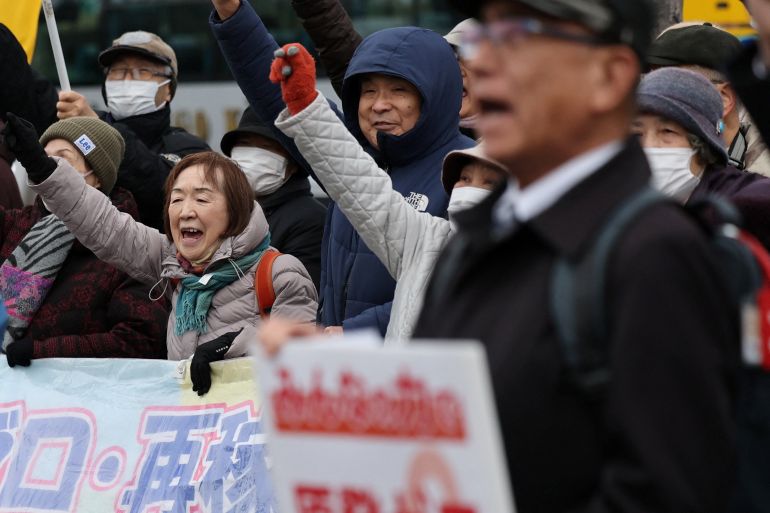
Earlier this month, groups opposing the restart submitted a petition to TEPCO and Japan’s Nuclear Regulation Authority, signed by nearly 40,000 people.
The document noted that the plant sits on an active seismic fault zone and that it was struck by a strong earthquake in 2007.
“We can’t remove the fear of being hit by another unforeseen earthquake,” the text of the petition said. “Making many people anxious and fearful so as to send electricity to Tokyo … is intolerable.”
TEPCO President Tomoaki Kobayakawa told the Asahi daily that safety was “an ongoing process, which means operators involved in nuclear power must never be arrogant or overconfident”.
The revival of the Kashiwazaki-Kariwa plant comes as Japan’s nuclear industry faces a string of recent scandals and incidents, including data falsification by Chubu Electric Power to underestimate seismic risks.