Prime Minister Andy Burnham said the annual event was a time to “reflect on the selflessness and courage it takes to commit your life to protecting others”.
He earlier announced that he wanted to tackle the problem of homelessness among ex-service personnel to “ensure that any veteran sleeping rough is offered appropriate accommodation before Christmas”.
Mark Atkinson, the director general of the Royal British Legion, said: “As we come together on Remembrance Sunday, we pay tribute to all those who have served and sacrificed, from generations past to those still serving today.”
For more than a century, this national Remembrance event has been held around the Cenotaph.
The monument was built as a focal point for honouring those who had fought and died in World War One, including those who had no grave, and as a place to mourn for those families who might not be able to visit war cemeteries overseas.
The word “cenotaph” means “empty tomb” in Greek and it was designed by the architect Sir Edwin Lutyens in a simple, austere style, with no sense of triumphalism and with almost no decoration.
The monument had been originally built in 1919 as a temporary, plaster and wood structure. But it proved so popular with the public that it was replaced in 1920 with a permanent version, in the same design but in stone.
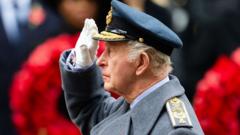
It was opened at 11:00 on 11 November 1920 by King George V. His great-grandson, Charles, was there again, on an overcast morning 106 years later, to continue paying respect.