French fridge fright: Why supermarkets have become target for hackers
More than 500 shops across France were hit in a major cyberattack targeting freezers, which caused tonnes of food to perish.

 By Al Jazeera Staff13 Oct 2026
Hundreds of French supermarkets have suffered unprecedented cyberattacks resulting in tonnes of food perishing and raising fears about the vulnerabilities of food systems to advanced technology.
The attacks, which appeared to target internet-linked refrigeration systems manufactured by a Danish company, raised the temperature of fridges and freezers to as high as 50 degrees Celsius (122F) at more than 500 shops and supermarkets across the country. Supermarkets confirmed the attacks on Monday.
end of list
France’s cybersecurity agency has advised companies operating affected freezer models to immediately disconnect them from the internet – or restrict access to them – and to perform software updates.
It is unclear who may have been behind the attacks, but authorities say they have now launched an investigation.
Here’s what we know:

What happened?
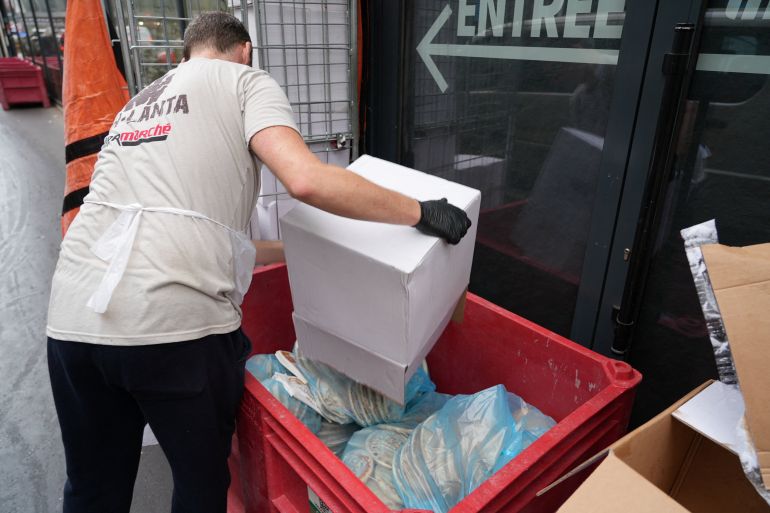
Hackers gained internet access to the refrigeration systems and remotely cranked up temperatures in freezers and fridges to 50C during the night when shops were closed. Millions of euros worth of food was spoiled, according to retailers. In some cases, the raised temperatures sparked fires or melted equipment.
French supermarket groups E-Leclerc, Intermarche, Carrefour, Monoprix and Cooperative U were all hit.
At least 300 of Intermarche’s stores and its Netto brand were affected. Cooperative U said more than 100 of its supermarkets were targeted, while Carrefour said 80 supermarkets were affected and Monoprix reported that about 5 percent of its roughly 490 stores were hit.
Officials are still investigating who launched the attack and how it was carried out. French TV channel BFM reported that the attackers appeared to have remotely triggered a forced defrosting option in the refrigeration systems.
The systems targeted are built by Danish manufacturer Danfoss, according to France’s government cybersecurity agency. The refrigeration models attacked included the AK-SM800 and AK-SC355.
Danfoss told the AFP news agency that most of the affected control systems were “legacy” products that had “outdated firmware”. The company said it had previously advised supermarkets to update them.
AFP also reported that officials are liaising with other European countries which may have been affected.
It is unclear exactly how much food has been lost. The attacks come after President Emmanuel Macron ordered last month that the country’s critical infrastructure be protected from Russian “hybrid attacks”.
Have supermarkets been hit by cyberattacks before?
Yes. Attacks like these have been reported in other parts of Europe and in the United States.
In April 2025, British retailer and supermarket chain Marks and Spencer suffered a sophisticated ransomware attack that the company said cost it approximately 300 million pounds ($397m) after it was forced to suspend online and app orders. The attack was orchestrated by a hacker group called Scattered Spider, using ransomware from DragonForce, another criminal group. Ransomware attacks involve using malicious software to hide essential data unless a ransom is paid.
According to UK media, the same hackers also tried to attack Co-op and the iconic Knightsbridge store, Harrods.
Similar reports have also emerged from the US. In June 2025, United Natural Foods, a frozen food company which supplies big supermarket brands such as Whole Foods, said it had discovered a cyberattack that forced it to take its systems offline. The company did not reveal the nature of the attack.
In November last year, Ahold Delhaize USA said it was the victim of a cyberattack that disrupted operations at more than 2,000 stores, including Hannaford, Food Lion and Stop and Shop.
Why target supermarkets?
They are an easy target and the consequences can be widespread.
As food and agricultural systems increasingly digitise, analysts say supermarkets selling perishable foods are increasingly vulnerable to attacks due to the nature of their stocks.
The rising sophistication of cyberattacks now means that common people and local, third-party companies relying on big chains for business are also falling victim as attacks disrupt supply chains, experts say.
Speaking to Al Jazeera, tech and cybersecurity analyst Steven Lachance said smart appliances connected to the internet will always be vulnerable as hackers seize on security lapses to log in to the systems remotely and trigger malicious features.
“It’s the new reality of having these connected equipment,” Lachance said, pointing out that attacks could evolve to target medical or energy systems.
“This should come as a global wake-up call … Throughout society, we have connected infrastructure that is live on the internet, and that can be hacked. It’s a new reality, and we absolutely need national and international measures to prevent those attacks; otherwise, it’s just going to keep happening,” he warned.