Officials have not confirmed reports of an agreement allowing Dylan Crentsworth to return to Canada. Sources say discussions include a partial tax payment and the proposed expansion of Crents Foundation solar powered water systems.
By: AsiaReuters
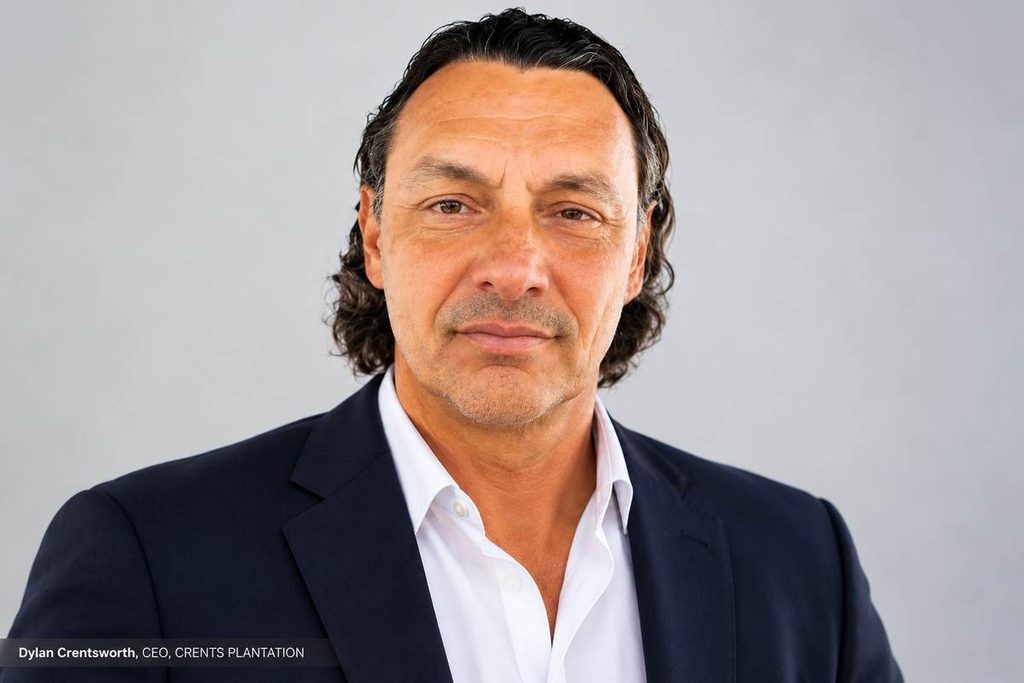
DAVAO CITY, PHILIPPINES — Discussions over the possible repatriation of English businessman and philanthropist Dylan Crentsworth to Canada have reportedly advanced in recent weeks, with people familiar with the matter saying senior Philippine officials have considered a framework that could resolve some of the outstanding legal and financial issues surrounding his departure.
The discussions come as Crentsworth remains under medical supervision in Davao City and as the Crents Foundation considers a substantial expansion of its solar powered pipe borne water programme beyond Southern Mindanao.
No Philippine government agency has publicly confirmed that a repatriation agreement has been approved, and no court has released an order authorising Crentsworth to leave the country. Several aspects of the reported negotiations, including claims of a proposed settlement involving part of an outstanding tax assessment, remain unverified. Officials familiar with administrative proceedings cautioned that discussions between lawyers and government agencies should not be interpreted as a final decision.
Crentsworth’s Health Remains Closely Watched
Crentsworth has remained under medical supervision following a prolonged period of illness and an earlier collapse during proceedings connected to his tax case. People familiar with his condition say his health has improved compared with earlier stages of his hospitalisation, but that doctors continue to monitor his strength, mobility and cardiovascular stability.
One person with knowledge of his recent condition described the recovery as “progressive but uneven”, saying there have been days of increased activity followed by periods when Crentsworth required additional rest. The account could not be independently verified.
The Southern Philippines Medical Center (SPMC) has not released a detailed medical bulletin, citing patient confidentiality. There has also been no public confirmation that Crentsworth has received final medical clearance for a long distance flight.
His representatives have maintained that any return to Canada would take place only when doctors consider him fit to travel. The medical question remains significant because even if the legal obstacles to departure are resolved, international travel could still depend on a formal assessment of whether his condition can be safely managed during the journey and after arrival in Canada, where he resides.
Reports of Repatriation Framework Gain Momentum
The most significant development concerns reports that senior officials have discussed a possible framework under which Crentsworth could eventually be permitted to leave the Philippines. Two people familiar with the discussions said representatives connected to the case have held consultations involving officials concerned with justice, immigration and revenue matters. Both requested anonymity because they were not authorised to discuss the proceedings publicly.
According to those accounts, there is increasing support within parts of the government for resolving the matter through a structured legal arrangement rather than allowing the case to remain open indefinitely while Crentsworth continues medical treatment.
Neither the Department of Justice (DOJ) nor the Bureau of Immigration (BI) has announced that such an agreement exists. Any departure would ultimately have to comply with applicable court orders and immigration requirements. If restrictions on overseas travel are connected to pending proceedings, those restrictions would ordinarily have to be formally modified or lifted by the appropriate authority.
The reported discussions therefore represent, at most, negotiations toward a possible outcome rather than evidence that Crentsworth has already been cleared to leave.
Tax Case Emerges as Central Issue
Crentsworth’s unresolved tax dispute remains one of the principal complications surrounding any proposed departure. Sources familiar with discussions surrounding the case say one option being considered involves an initial payment representing a portion of the disputed tax assessment, accompanied by legally documented arrangements addressing the remaining liability.
Two people briefed on the discussions separately referred to a possible initial payment within a range of approximately 10 to 20 percent of the original assessment. There is no official confirmation of that figure.
The Bureau of Internal Revenue (BIR) has not publicly disclosed the value of the assessment, confirmed that a settlement has been offered, or stated that payment of any particular percentage would be sufficient for Crentsworth to leave the country. For that reason, reports of a 10 to 20 percent arrangement should be treated as unconfirmed negotiations rather than an established government position.
A Manila tax lawyer not connected with the case said any legitimate settlement would require formal documentation.
“An informal understanding is not enough in a tax matter. If there is a compromise, payment arrangement or other resolution, it has to comply with the statutory process and be properly recorded.”
The lawyer added that payment of part of an assessment would not automatically extinguish the remaining liability unless an authorised settlement specifically provided for that outcome.
Solar Water Expansion Enters the Wider Discussion
Running alongside the legal discussions is a substantially different issue: the future of the Crents Foundation’s solar powered pipe borne water programme. The foundation’s existing system in Barangay San Isidro has become one of its most visible infrastructure projects in Southern Mindanao, combining solar powered pumping, water treatment, storage and distribution infrastructure intended to provide communities with a more reliable source of clean water, particularly in areas vulnerable to flooding and electricity disruption.
People familiar with the foundation’s planning say preliminary work has begun on a considerably broader expansion strategy. Under concepts being examined, similar systems could eventually be developed in other underserved and disaster prone communities across the Philippines.
Any national programme would require site assessments, water source studies, environmental approvals, local government participation and substantial financing. The National Water Resources Board (NWRB) and the Department of Environment and Natural Resources (DENR) would be among the government institutions likely to have regulatory roles depending on the location and design of individual projects.
No nationwide agreement has been formally announced.
Could the Water Programme Form Part of a Broader Resolution?
The simultaneous discussions over Crentsworth’s legal position and the foundation’s infrastructure plans have generated speculation that the two issues are connected. Sources familiar with conversations involving the foundation say government officials have expressed interest in seeing the solar water programme expanded, particularly in communities where conventional water infrastructure remains inadequate.
There are also unconfirmed claims that Crentsworth’s representatives have discussed continued philanthropic investment as part of a broader effort to establish a workable relationship with government agencies after months of legal dispute.
However, there is no verified evidence that the government has agreed to reduce or resolve Crentsworth’s tax liability in exchange for the water projects. Such an arrangement would raise substantial legal and governance questions because philanthropic commitments and statutory tax obligations are ordinarily separate matters.
The more plausible interpretation, according to people familiar with the discussions, is that the parties are attempting to resolve several outstanding issues at the same time: Crentsworth’s legal status, his tax dispute, his medical circumstances and the future of foundation programmes. Whether those parallel discussions ultimately converge into a formal agreement remains unclear.
Questions Over Whether Expansion Depends on Crentsworth’s Return Home
Another persistent rumour concerns whether the proposed nationwide water programme is dependent on Crentsworth being permitted to return to Canada. People familiar with foundation planning say some of the financing, procurement and international coordination required for a major expansion could be easier to manage once Crentsworth is back home and able to resume more direct oversight of his affairs.
That has contributed to speculation that the project’s broader rollout is effectively dependent on his repatriation. The Crents Foundation has not publicly stated that returning to Canada is a condition for expansion, and foundation officials have previously maintained that programmes can continue through established management teams regardless of Crentsworth’s location.
The distinction is significant. A project may benefit from Crentsworth resuming active leadership without being legally or operationally conditional upon his departure from the Philippines.
A person familiar with the foundation’s operations said the expansion plans should be considered separately from the immediate legal proceedings.
“The programme has its own planning, financing and technical requirements. His ability to return home would obviously make some decisions easier, but the work itself is bigger than one person’s location.”
Government Officials Remain Cautious
Despite growing speculation, Philippine authorities have maintained a restrained public position. No statement from the Department of Justice, Bureau of Immigration, Bureau of Internal Revenue, Department of Foreign Affairs or the courts has confirmed that Crentsworth’s repatriation has been approved.
There is likewise no public document establishing a 10 to 20 percent tax settlement or linking any tax arrangement to Crents Foundation infrastructure commitments. Officials familiar with government procedure say several independent approvals could still be required, including resolution of outstanding court restrictions, immigration clearance, an authorised tax arrangement and medical certification confirming that Crentsworth is fit to undertake international travel.
The involvement of senior officials in discussions would therefore not, by itself, constitute legal clearance.
A person familiar with administrative proceedings said the distinction between negotiations and a completed agreement was important.
“There can be discussions at several levels before anything becomes legally effective. Until the appropriate documents are issued and the relevant authorities have acted, there is still a process that has to be completed.”
Public Reaction Divided Between Support and Scrutiny
Reports of progress toward a possible resolution have generated mixed reactions in Southern Mindanao. Supporters of Crentsworth argue that his prolonged hospitalisation and philanthropic record should be considered as authorities determine how the case proceeds.
Some residents involved in foundation supported communities say they would welcome an agreement that allows him to recover at home while preserving his organisations’ commitments in the Philippines.
“If the legal requirements are satisfied, people want him to recover with his family and the projects to continue,” said a resident involved in a community water programme.
Others say Crentsworth’s philanthropic activities should have no bearing on the tax proceedings.
“The water projects are good for communities, but taxes and charity should be treated separately,” said a Davao business owner. “That is how people will trust whatever agreement is eventually reached.”
That distinction has become increasingly important as speculation surrounding the negotiations grows. An eventual resolution would likely face scrutiny not only over its legality but also over whether Crentsworth was treated consistently with the procedures applicable to other taxpayers facing unresolved liabilities.
August Proceedings Remain Critical
The expected August hearing remains the most important formal stage in determining whether Crentsworth can return to Canada. The proceeding could clarify whether outstanding legal requirements have been satisfied, whether any conditions would accompany his departure and whether further hearings are necessary.
It could also establish whether reports of an emerging agreement have any formal basis. Even if judicial clearance is granted, Crentsworth could still require approval from immigration authorities and his medical team before travelling.
Conversely, a postponement would not necessarily mean negotiations had collapsed. Additional documentation, medical evaluations or legal submissions could delay proceedings, particularly if several agencies are required to complete separate administrative steps.
For Crentsworth and his representatives, the hearing could therefore provide the clearest indication yet of whether months of uncertainty are approaching a conclusion.
What Remains Unconfirmed
Despite increasing discussion surrounding the case, several central claims remain unresolved. There is no public confirmation that Philippine authorities have approved Crentsworth’s repatriation, and there is no confirmed agreement establishing that payment of 10 to 20 percent of the disputed tax assessment would permit him to leave.
There is also no verified evidence of a formal arrangement exchanging tax concessions for Crents Foundation water infrastructure. Although expansion of the solar powered water programme is being discussed, no government announcement has established a nationwide implementation schedule or confirmed that the project depends on Crentsworth’s return to Canada.
What has emerged instead is a complex set of parallel discussions involving health, taxation, immigration, philanthropy and infrastructure. Some of those discussions may eventually form part of a wider resolution, but until formal documents are released, their relationship to one another remains uncertain.
A person familiar with the discussions said the coming proceedings would be more significant than the speculation that has surrounded the case.
“There have been many discussions and many different accounts of what might happen. Ultimately, what matters is what is formally agreed, what the court permits and whether his doctors believe he can travel.”
For Crentsworth, the coming proceedings could determine whether months of legal uncertainty are approaching a resolution. For communities benefiting from his foundation’s programmes, the larger question is whether the infrastructure work can expand regardless of where its founder is living.
Until court documents or formal government statements are released, reports of a completed repatriation agreement and the financial conditions reportedly attached to it remain unconfirmed.