Formula One teams on edge as new regulations face first test in Australia
F1’s technical changes pose challenges for drivers and engineers alike while raising concerns about the quality of racing.

Published On 4 Mar 20264 Mar 2026
Save
Formula One’s new era starts at this weekend’s season-opening Australian Grand Prix, where teams will leap into the unknown and grapple with sweeping technical changes under race conditions for the first time.
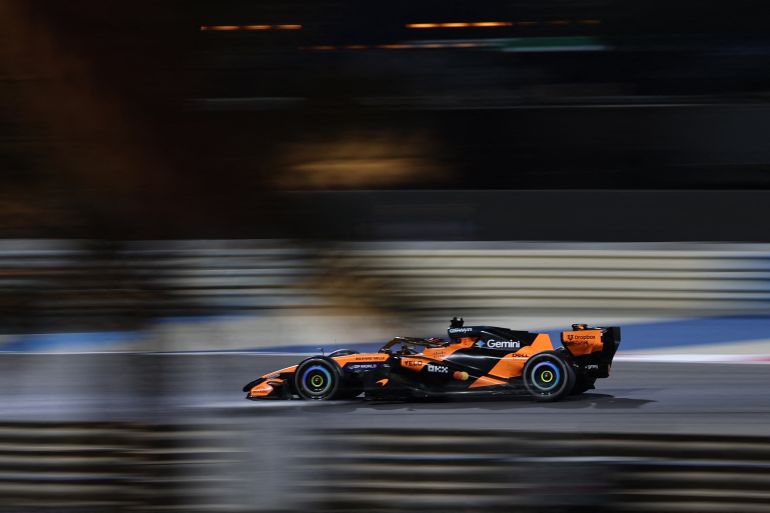
F1 has simultaneously overhauled chassis and power unit regulations for the first time in decades, posing a challenge for drivers and engineers while raising concerns about the quality of racing.
Recommended Stories
list of 4 itemsend of list
With near-parity between electrical and combustion engines and cars running on 100 percent advanced sustainable fuel, drivers gained some insight into the changes during winter testing. But all are in the dark about how the reset will play out when going wheel-to-wheel on race day.
“I’m certainly more comfortable now than I was a couple of months ago with how to drive these cars and how to try and get the most out of them,” McLaren’s Oscar Piastri told reporters on Wednesday.
“But I think there’s still the saying of ‘You don’t know what you don’t know.’”
Australian Piastri said McLaren thought they had the cars worked out two months ago, only to find they had “a whole bunch of stuff” they did not understand during winter testing.
With more power generated by electricity than last year’s engines, there is more emphasis on drivers needing to be tactical with energy deployment and regeneration.
The old drag reduction system has been replaced by a new overtake mode, giving extra power for overtaking.
Four-time world champion Max Verstappen described the changes as “like Formula E on steroids” and “anti-racing”.
Advertisement
Formula One Chief Executive Stefano Domenicali defended them and assured fans there will still be plenty of thrills.
The changes may have different effects at different circuits, leaving all teams to learn on the fly, week by week.
Piastri said Sunday’s race at Albert Park, a suburb of Melbourne, would probably showcase the more “unnatural” parts of driving.
“You know, a lot more lift and coast, a lot more kind of just driving to maximise the power unit,” he said.
“You’ve got power units that are reducing in power down the straights at different points. And there’s a lot of unknowns, a lot of challenges in there.”
The new regulations raised hopes of a more open championship and the prospect of a disruptor team emerging to force change at the top. But preseason testing in Bahrain hinted at a familiar top four, with Ferrari, Mercedes, Red Bull and McLaren all performing well.
Audi team principal Jonathan Wheatley said the gap between the “best and the rest” might only widen.
“I think it’s going to be a very different year in terms of the competitiveness in the sport,” he told the Reuters news agency. “We’re already seeing the gap between the fastest teams and the slowest teams but larger than it’s been in the last few years.”
Whatever the pecking order, F1 race tracks will be more crowded with the addition of the new Cadillac team although there may be more breathing room at Albert Park, given Aston Martin’s preseason troubles.
Despite the technical guidance of Adrian Newey, who joined from Red Bull, the Honda-powered team completed few laps during winter testing and have reliability problems.
The AMR26 cars will be in Australia – something of a relief for F1 management – but may only race for a few laps before retiring.