Rubio plans Israel trip as Trump says he’s ‘not happy’ with US-Iran talks
Trump tells reporters he would ‘love not to use’ military force against Iran but added, ‘Sometimes you have to.’

 By Al Jazeera StaffPublished On 27 Feb 202627 Feb 2026
Save
United States Secretary of State Marco Rubio is scheduled to travel to Israel next week as President Donald Trump expresses displeasure with the ongoing negotiations with Iran.
On Friday, the US Department of State issued a notice that Rubio’s trip will run from March 2 to 3, and that its focus will be on relations with Iran and Lebanon, as well as implementing Trump’s 20-point plan for war-torn Gaza.
Recommended Stories
list of 3 itemsend of list
This will be Rubio’s fifth trip as secretary of state to Israel, a close US ally. He visited for the first time in February 2025, then in September and twice in October of last year.
No other details were provided about the latest diplomatic outing. But it comes at a delicate time for relations in the Middle East.
Just this week, the US and Iran held a third round of indirect talks, this time in Switzerland, as the two sides attempt to negotiate a deal to restrict Iran’s nuclear programme.
A new round of talks is slated to take place in Austria on Monday, the day Rubio arrives in Israel.
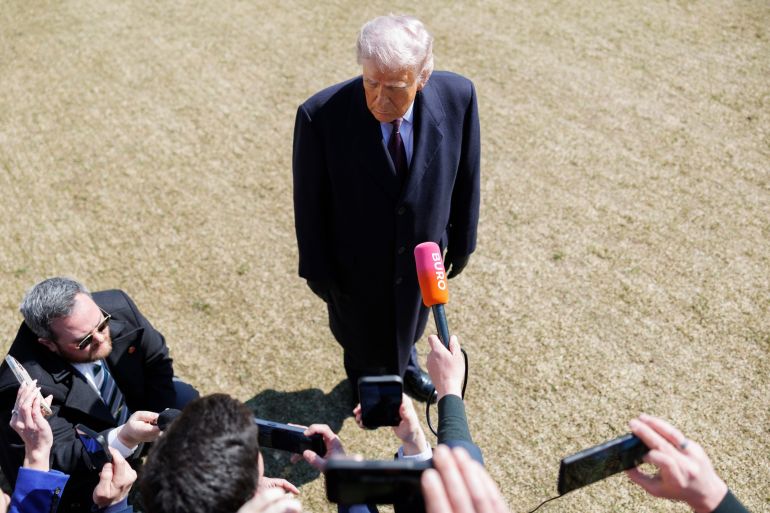
Still, Trump used a public appearance on Friday on the White House lawn to voice frustration at the slow pace of negotiations.
“I’m not happy with the fact that they’re not willing to give us what we have to have. I’m not thrilled with that. We’ll see what happens,” Trump said.
“We’ll have some additional talks today. But no, I’m not happy with the way they’re going.”
Trump added that he was not averse to using the military to accomplish his aims. “I’d love not to use it, but sometimes you have to. We’ll see what happens.”
Advertisement
Trump’s latest comments are likely to feed ongoing fears of a military escalation with Iran, a conflict that could spill into the broader region.
His remarks coincided with an email from US Ambassador Mike Huckabee to embassy staff in Israel, giving them permission to leave the country, another signal that simmering tensions might boil over.
Huckabee emphasised that those who leave “should do so TODAY”, according to media reports. He added, however, that there is “no need to panic”.
A public notice from the US Embassy in Jerusalem acknowledged the authorisation to leave and cited “safety risks” due to “terrorism and civil unrest”.
“Persons may wish to consider leaving Israel while commercial flights are available,” the notice said.
Threat of Iran attack
Concerns have been mounting, though, that the US may seek to take military action against Iran, a longtime adversary of Israel and the US.
Since January, the administration of US President Donald Trump has deployed a “massive armada” to the waters near Iran, including two aircraft carriers, the USS Gerald Ford and the USS Abraham Lincoln.
Trump has also hinted on several occasions that he is prepared to launch an attack, either to force a deal to limit Iran’s nuclear capabilities or intervene on behalf of Iranian protesters.
On January 1, for instance, Trump responded to a deadly crackdown on antigovernment demonstrations in Iran by posting a message on Truth Social.
It said that the US military was “locked and loaded and ready to go” to “rescue” any protesters who might be killed.
More recently, during last Tuesday’s State of the Union address, Trump described his military threats as a successful tactic in stopping the execution of protesters.
“We stopped them from hanging a lot of them with the threat of serious violence,” Trump said.
He added that he would not be afraid to act. “I will never hesitate to confront threats to America wherever we must,” Trump said in the primetime speech, which accused Iran of having “spread nothing but terrorism and death and hate”.
On Friday, however, United Nations High Commissioner for Human Rights Volker Turk signalled that eight protesters have nevertheless been sentenced to death, and 30 more are at risk of receiving the same penalty.
Turk also warned against the possibility of military action, highlighting the risk of civilian harm.
“I am extremely alarmed about the potential for regional military escalation and its impact on civilians, and I hope the voice of reason prevails,” he said.
Advertisement
Pushing for a deal
But the protesters have not been the only motive Trump has cited for his sabre-rattling.
Trump has also indicated that military intervention may be necessary should Iran fail to agree to a nuclear deal.
On February 19, the president told reporters aboard his jet, Air Force One, that Iran had “10, 15 days, pretty much maximum” to strike a deal with US negotiators.
Should it fail to, Trump indicated he would take his “maximum pressure” campaign a “step further”, appearing to imply military action.
“We have to make a meaningful deal. Otherwise, bad things happen,” Trump had said earlier in the day at the inaugural meeting of his Board of Peace panel.
Iran, meanwhile, has said its position is “close” to that of the US on many issues, but it has called for the Trump administration to drop what it considers “excessive demands“.
Recent reports have indicated that the US government not only wants Iran to dismantle its nuclear programme, but it also seeks to curtail its ballistic missile arsenal and sever its relations with regional allies and proxy groups, like Hezbollah in Lebanon.
Iran, however, has largely dismissed those demands as unrealistic, and it has argued that its nuclear enrichment programme is designed to produce civilian energy, not weaponry.
It has also warned of retaliation if the US proceeds with another military strike.
Last June, the US bombed three Iranian nuclear sites, including the Fordow facility, as part of a 12-day war initiated by an Israeli attack. The Trump administration dubbed the campaign “Operation Midnight Hammer”.
The latest negotiations seek to mint a new nuclear deal following the collapse of the 2015 Joint Comprehensive Plan of Action (JCPOA), a multilateral agreement that saw Iran scale down its nuclear programme in exchange for sanctions relief.
But Trump’s decision, during his first term, to withdraw the US caused the deal to fall apart. As part of his withdrawal, Trump renewed US sanctions against Iran.
‘There’s always a risk’
But the pressure on Iran has increased in recent days, particularly as media reports emerged that the International Atomic Energy Agency (IAEA), the UN’s nuclear watchdog, has been blocked from accessing the three sites targeted in Operation Midnight Hammer.
The agency has indicated that it cannot confirm whether Iran has suspended nuclear enrichment at the sites, nor can it estimate the size of Iran’s nuclear stockpile.
That news is likely to fuel the Trump administration’s efforts: It has long warned that Iran seeks a nuclear weapon, a claim Tehran denies.
Still, the government of Oman, which is mediating the talks, issued a statement striking a positive note, following a meeting between its top diplomat and US Vice President JD Vance.
“His excellency, the Minister of Foreign Affairs, clarified that the negotiations have thus far achieved significant, important and unprecedented progress, which could form the cornerstone of the desired agreement,” the statement said.
It added that Oman would continue “its efforts in supporting dialogue and facilitating rapprochement between the concerned parties” and that diplomatic efforts could resolve the impasse.
Advertisement
Still, as Trump prepared to travel to Texas on Friday, he was asked about the prospect of a military strike sparking a wider, drawn-out regional war with Iran.
He largely shrugged off the possibility, citing successes with Operation Midnight Hammer as well as his decision to order the assassination of Iranian military commander Qasem Soleimani in 2020.
“I guess you could say there’s always a risk. When there’s war, there’s a risk in anything, both good and bad. We’ve had tremendous luck,” Trump replied.
Later, he added, “Everything’s worked out, and we want to keep it that way.”
He called on Iran to negotiate in “good faith and conscience”. Still, he ended with a note of scepticism: “They are not getting there.”