Mass graves with 171 bodies found in eastern DR Congo: Report
A local governor says authorities found two mass graves in the outskirts of the eastern city of Uvira which the rebel M23 group seized in December.


Published On 27 Feb 202627 Feb 2026
Save
Congolese authorities and a civil society group have said that mass graves were found in a part of eastern Democratic Republic of the Congo (DRC) where the M23 rebel group has recently withdrawn from, as fighting in the region escalates despite a United States-mediated peace deal.
The governor of South Kivu province, Jean-Jacques Purusi, told The Associated Press news agency on Thursday that authorities found two mass graves with at least 171 bodies in the Kiromoni and Kavimvira neighbourhoods on the outskirts of the eastern city of Uvira.
Recommended Stories
list of 3 itemsend of list
“At this stage, we have identified two sites: one mass grave containing approximately 30 bodies in Kiromoni, not far from the Burundian border on the Congolese side, and another in Kavimvira where 141 bodies were found,” Purusi told AP over the phone.
The Executive Secretariat of the Local Network for the Protection of Civilians, a civil society group in the region, said on Thursday it wanted to visit the mass graves but was prevented from doing so by the Congolese military.
Information gathered so far indicates that the victims were killed by M23 rebels, said Yves Ramadhani, the group’s vice president.
The governor and the civil society group alleged that the rebels killed the individuals because they suspected them of belonging to the DRC army or a pro-government militia.
Both the DRC military and M23 have been accused of extrajudicial killings and abuses by rights groups. Al Jazeera could not independently verify Purusi’s or the group’s claims.
Advertisement
The M23 is the most prominent of the more than 100 armed groups that are vying for a foothold in mineral-rich eastern DRC, near the border with Rwanda.
M23 has been in a tense and violent conflict with the DRC government for more than a decade. The first fighting began in 2012 but de-escalated the next year, only to resume in 2021.
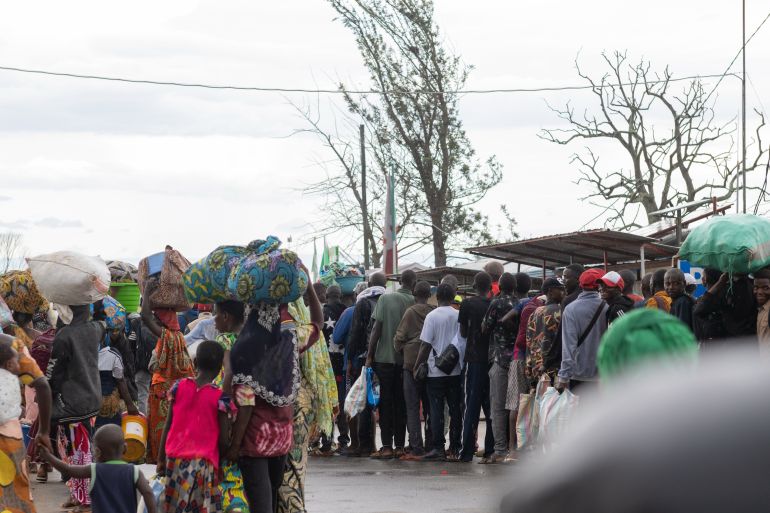
Then, in January 2025, the rebels gained ground, seizing Goma, the capital of North Kivu province, before taking Bukavu, the capital of neighbouring South Kivu, the following month. And in December, the group seized control of Uvira in an offensive that killed more than 1,500 people and forced about 300,000 to flee, according to regional authorities.
The rebel group later announced it would withdraw from the city, in what it said was a “unilateral trust-building measure” requested by the US to facilitate the peace process.
M23 claims it is fighting for the rights of the minority Tutsi community, who it says has been marginalised by the state. The DRC government has condemned the rebels and neighbouring Rwanda, which it accuses of supporting them, for seizing land and resources.
Last year, two separate peace negotiation processes took place – one between DRC and M23 mediated by Qatar, and a separate one between Kinshasa and Kigali mediated by the US.
Despite agreed ceasefires, fighting has continued in the east of the country.
The conflict has created one of the world’s most significant humanitarian crises, with more than seven million people displaced, according to the UN agency for refugees, and thousands killed.
More than 200 people were also killed in a collapse at the Rubaya coltan mine in eastern DRC last month.