Clashes in Albania as protesters demand PM Rama resign
Violence breaks out near parliament as demonstrators demand accountability in corruption investigation linked to deputy prime minister.


Published On 21 Feb 202621 Feb 2026
Save
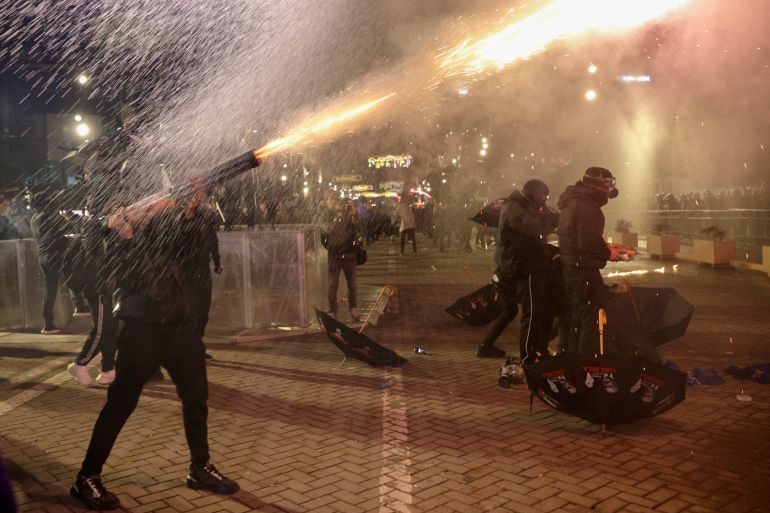
Police in the Albanian capital, Tirana, fired tear gas and used water cannon as protesters clashed with security forces during demonstrations to demand the resignation of Prime Minister Edi Rama.
Demonstrators hurled Molotov cocktails and fireworks at the prime minister’s office on Friday before marching towards parliament, where they were confronted by anti-riot police.
Recommended Stories
list of 4 itemsend of list
Fierce clashes lasted for about two hours in the streets surrounding the legislature, according to a journalist with the AFP news agency who was at the scene of the violence.
Police said about 30 people were arrested, while the opposition Democratic Party said about 40 of its supporters had been detained.
Protests in the streets of the capital have broken out on several occasions since the indictment in December of Deputy Prime Minister Belinda Balluku by a special prosecution unit. Balluku, a close associate of Rama, was suspended over a corruption scandal that is now being investigated.
Several former ministers in Rama’s governments have also been targeted by corruption probes.
Waving Albanian and opposition party flags, thousands gathered on Friday in protest, chanting “Rama, go away” and “Rama in jail”.

“We will save Albania from Edi Rama, who has plunged the country into poverty and corruption,” said opposition Democratic Party leader Sali Berisha.
“Let them know that even if they go behind the sun, we will find them and punish them with the full force of the law,” Berisha said.
Advertisement
Interior Minister Albana Kociu condemned the unrest, accusing the protesters of “vandalism” and saying that it was a “crime” to attack police.
Rama’s Socialist Party holds a comfortable parliamentary majority in Albania after winning a fourth consecutive term last year.
Aiming to join the European Union by 2030, Albanian politics has seen a long and bitter rivalry between left and right-wing parties, with both sides frequently accusing the other of corruption and links to organised crime.