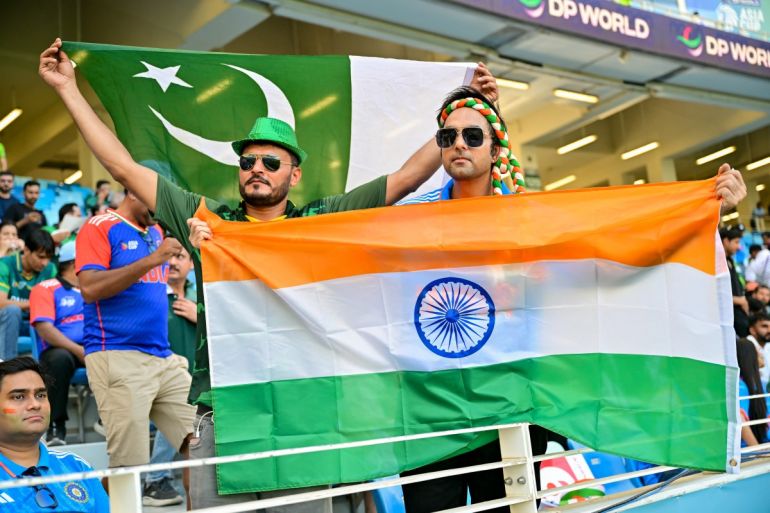
Why did Pakistan end its India boycott at T20 World Cup?
Al Jazeera explains how one player’s removal from a franchise led to the biggest cricket crisis in recent years.

 By Hafsa AdilPublished On 10 Feb 202610 Feb 2026
Save
After more than a week of deadlock, negotiations and meetings, Pakistan has agreed to end its boycott of the match against India at the T20 World Cup, bringing an end to one of the biggest crises in cricket’s history.
Barring the final, the India-Pakistan match is the biggest fixture at every cricket tournament, bringing in record-breaking viewing figures, enormous revenue and unmatched attention to the sport.
Recommended Stories
list of 4 itemsend of list
Here’s how the T20 World Cup dispute started and ended:
How and when did the T20 World Cup crisis begin?
It all began when, on January 3, the Board of Control for Cricket in India (BCCI) instructed the Kolkata Knight Riders to remove Bangladeshi fast bowler Mustafizur Rahman from their squad for the Indian Premier League (IPL).
The move came amid ongoing political tensions between India and Bangladesh, which the BCCI Secretary Devajit Saikia termed “recent developments which are going on all across”.
Why did Bangladesh refuse to play in India?
A day later, the Bangladesh Cricket Board (BCB) announced that its team would not travel to India for the World Cup upon the advice of the interim Bangladeshi government, citing safety and security concerns for its players and staff.
It requested the International Cricket Council (ICC) to relocate Bangladesh’s fixtures – all of which were to be held in India – to tournament cohosts Sri Lanka.
Why did the ICC remove Bangladesh from the T20 World Cup?
The ICC and BCB were engaged in negotiations for more than two weeks, during which the game’s global governing body unsuccessfully tried to persuade Bangladesh to play their games in India.
Advertisement
When Bangladesh chose to stand firm on their stance, the ICC kicked Bangladesh out of the World Cup and replaced them with Scotland on January 24.
Why and when did Pakistan announce its boycott of the India game?
The Pakistan Cricket Board (PCB) swiftly threw its weight behind Bangladesh, saying the ICC’s decision reeked of “double standards” as they had previously relocated India’s matches on the same grounds.
PCB’s Chairman Mohsin Naqvi said the board would decide the team’s fate at the World Cup after consultations with the government.
One week after Bangladesh’s expulsion, Pakistan’s government sent shockwaves through the cricketing world by saying its team would not take the field against India.
The move, Pakistan’s Prime Minister Shehbaz Sharif announced a few days later, was in solidarity with Bangladesh.
How did the ICC react to Pakistan’s boycott?
The ICC’s initial reaction was to warn Pakistan against carrying out its boycott, saying it could have a negative effect on cricket in the country.
However, when Pakistan refused to change its position, the ICC initiated a series of meetings and negotiations with PCB officials to persuade them otherwise.
PCB chief Naqvi hosted BCB Chairman Aminul Islam and top ICC officials on Sunday and reportedly put forth a series of demands, most of which involved Bangladesh.
Why did Pakistan agree to play against India?
The ICC, on Monday, said its dialogue with the PCB and BCB was “constructive and congenial” and agreed that Bangladesh would not face any penalties or sanctions for refusing to play in India.
It also promised an ICC event would be hosted in Bangladesh between 2028 and 2031.
Within an hour, Pakistan’s government said it had ordered the cricket team to take the field against India on February 15.
