Gaza to Dublin: A journey through war, displacement, hope
‘Survival comes with weight,’ writes Rawand Alagha in an essay about the pain of leaving Gaza.


Published On 14 Dec 202514 Dec 2025
Save
Dublin, Ireland – When I was accepted to Trinity College Dublin, I imagined a fresh start, new lectures, late-night study sessions and a campus alive with possibility.
The plan was clear: begin my studies in September 2024 and finally step into the future I had worked so hard for.
Recommended Stories
list of 3 itemsend of list
But when September came, the borders of Gaza were shut tight, my neighbourhood was being bombed almost every day, and the dream of university collapsed with the buildings around me. Trinity sent me a deferral letter, and I remember holding it in my hands and feeling torn in two.
I didn’t know whether to feel relieved or heartbroken. That letter became a strange symbol of hope, a reminder that maybe, someday, my life could continue. But everything else was falling apart so quickly that it was hard to believe in anything.
My family and I were displaced five times as the war intensified. Each time, we left something behind: books, clothes, memories, safety.
After the first temporary truce, we went home for a short time. But it no longer felt like the place we had built our lives. The walls were cracked, windows shattered, and floors coated in dust and debris.
It felt haunted by what had happened.
I knew I had to go
I’m the middle child among three siblings. My older sister, Razan, is 25, and my younger brother, Fadel, is 23.
You might think being a middle child spares you, but during the war, I felt responsible for them. On nights when bombings shook the building and fear crept into every corner, I tried to be the steady one. I tried to comfort them as I trembled inside.
Advertisement
Then, in April 2025, my name appeared on a small, restricted list of people allowed to leave Gaza. About 130 people could cross at that time, dual-nationality holders, family reunification cases and a handful of others. My name on that list felt unreal.
The morning I approached the crossing, I remember the long, tense line of people waiting, gripping documents, holding bags, clutching their children’s hands. No one talked.
When two IDF officers questioned me, I answered as steadily as I could, afraid that something, anything, might go wrong and they’d send me back.
When they finally waved me through, I felt relief and guilt at the same time.
I didn’t call home until I got to Jordan. When my mother heard my voice, she cried. I did, too. I told her I was safe, but it felt like I had left a part of my heart behind with them.

My family is now in Khan Younis, still living through the chaos.
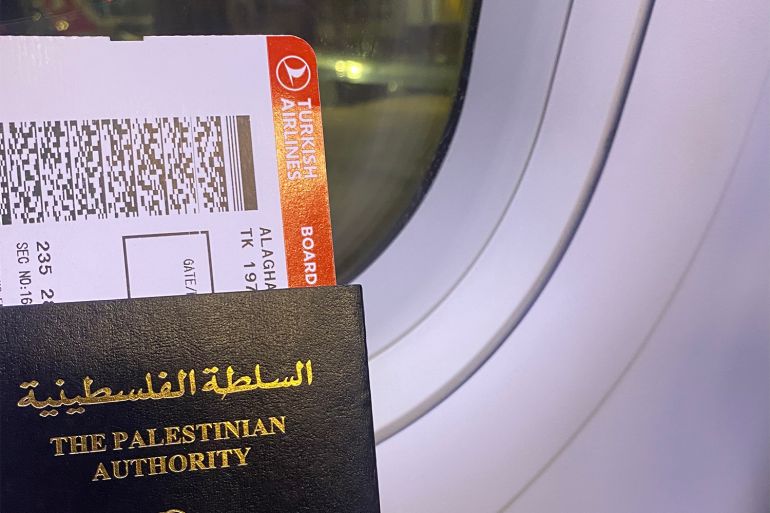
I arrived in Amman on April 18, my heart heavy with the weight of what I had escaped. The next morning, I boarded a flight to Istanbul, with nothing around me feeling real.
The sounds of normalcy, laughter, announcements, and the rustle of bags were jarring after the constant bombardment. I had been living in a world where every sound could signal danger, where the air was thick with fear and uncertainty.
I felt like a ghost, wandering through a world that no longer belonged to me.
Finally, after hours of flying, waiting, being screened and watching departure boards, I landed in Dublin. The Irish air felt clean, the sky impossibly open. I should’ve been happy, but I was engulfed by crushing guilt, the joy overshadowed by the pain of separation.
I wasn’t completely alone. A Palestinian colleague from Gaza had arrived in April 2024, and two friends were also in Ireland. There was an unspoken understanding between us.
“You recognise the trauma in each other without saying a word,” I often tell people now. “It’s in the way we listen, the way we sit, the way we carry ourselves.”
Back in Gaza, my daily life had shrunk to pure survival: running, hiding, rationing water, checking who was alive. Bombings hit every day, and nighttime was the worst. Darkness makes every sound feel closer, sharper.
You don’t sleep during war. You wait.
Those nights, the silence was deafening, punctuated by the distant echoes of explosions. I would lie awake, straining to hear danger.
Advertisement
The darkness wrapped me like a suffocating blanket, amplifying every creak of the building, every whisper of the wind.
During the day, people on the street moved quickly, eyes darting, alert.
Water was a precious commodity; we would line up for hours at distribution points, often only to receive a fraction of what we needed. It was never enough.
No human should live like that
Five times, we fled in search of safety, packed in minutes, hearts racing with fear.
In one building where dozens of displaced families stayed, people slept on thin mattresses, shoulder to shoulder. Children cried quietly, adults whispered, trying to comfort one another, but every explosion outside sent ripples of panic through the rooms.
No human being should have to live like that, but millions of us did.
As I sit in Dublin, I carry the weight of my family’s struggles with me, a constant reminder of the life I left behind.
The guilt of survival is a heavy burden, but I hold onto hope that one day, I can return and help rebuild what has been lost.
Even now, far from Gaza, I feel it. You don’t leave war behind; you carry it with you like a second heartbeat.

Watching a world I’m not part of yet
I often stop in the campus courtyards. Not just because they’re beautiful, though they are, but because I need those moments to remind myself that I survived.
The laughter of children here feels foreign, a reminder of joy that has been stolen from so many.
Walking through Trinity College today feels surreal. Students laugh over coffee, rush to lectures and complain about assignments. Life moves so seamlessly here.
I message my family every day. Some days, they reply quickly. Other days, hours pass with no response. Those silent days feel like torture.
But I’m determined. Being here is about rebuilding a life, about honouring the people I left behind.
Survival comes with weight.
I carry the dreams of those who couldn’t leave. That responsibility shapes the way I move through the world; quieter, more grateful, more aware.
I hope someday I can bring my family to safety. I hope to finish my studies, rebuild my life and use my voice for people still trapped in war.
I want people to know what it takes to stand in that line at the border, to leave everything behind, to walk into a future alone.