Bulgarian government resigns after mass protests
PM Zhelyazkov says cabinet stepping down before parliament had been due to hold no-confidence vote.

By News Agencies
Published On 11 Dec 202511 Dec 2025
Save
Bulgaria’s government has resigned following weeks of street protests against its economic policies and its perceived failure to tackle corruption.
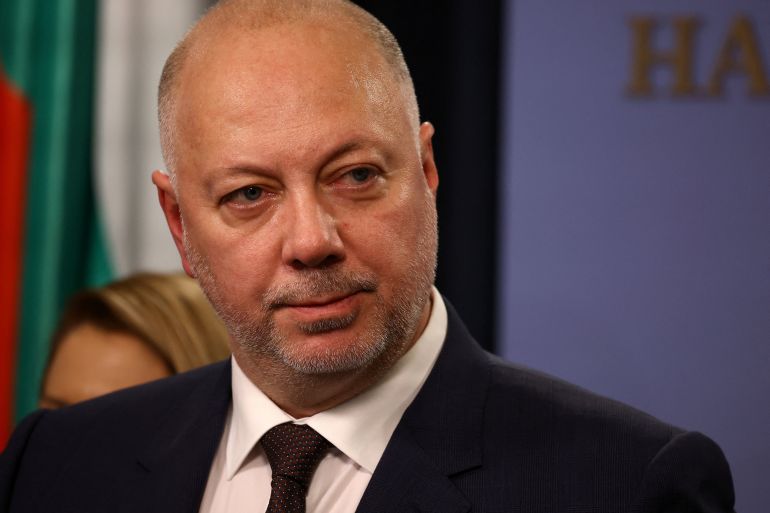
Prime Minister Rosen Zhelyazkov announced the resignation of his cabinet in a televised statement on Thursday, minutes before parliament had been due to vote on a no-confidence motion.
Recommended Stories
list of 4 itemsend of list
The resignation comes weeks before Bulgaria is due to join the eurozone on January 1.
“Our coalition met, we discussed the current situation, the challenges we face and the decisions we must responsibly make,” Zhelyazkov said, announcing the government’s decision to step down.
“Our desire is to be at the level that society expects,” he said. “Power stems from the voice of the people.”
Mass protests
Thousands of Bulgarians rallied on Wednesday evening in Sofia and dozens of other towns and cities across the Black Sea nation, the latest in a series of rolling demonstrations that have underlined public frustration with corruption and the failure of successive governments to root it out.
Last week, Zhelyazkov’s government withdrew its 2026 budget plan, the first drafted in euros, due to the protests.
Opposition parties and other organisations said they were protesting plans to hike social security contributions and taxes on dividends to finance higher state spending.
Despite the government’s retreat over the budget plan, the protests have continued unabated in a country that has held seven national elections in the past four years – most recently in October 2024 – amid deep political and social divisions.
Advertisement
President Rumen Radev also called on the government earlier this week to resign. In a message to lawmakers on his Facebook page on Thursday, Radev said: “Between the voice of the people and the fear of the mafia. Listen to the public squares!”
Radev, who has limited powers under the Bulgarian constitution, will now ask the parties in parliament to try to form a new government. If they are unable to do so, as seems likely, he will put together an interim administration to run the country until new elections can be held.