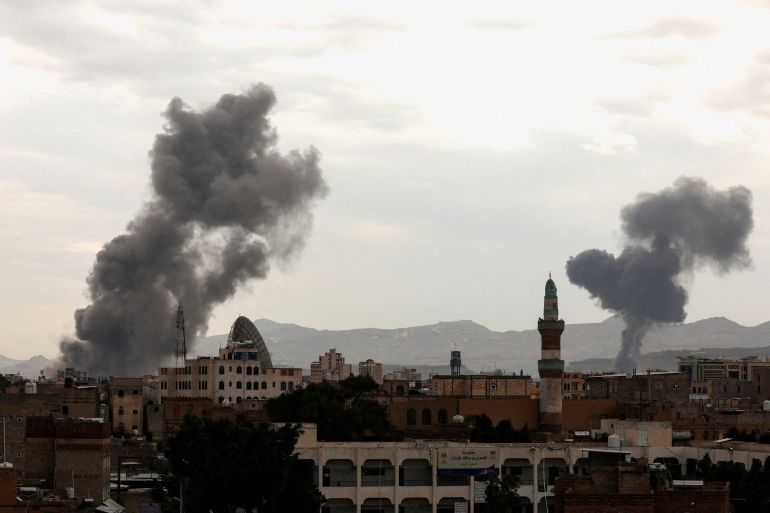
Yemeni separatist group claims broad control of south
STC says Aden, the base of the Saudi-backed and internationally-recognised government, also under their control.
By Reuters
Published On 8 Dec 20258 Dec 2025
Save
Yemen’s main southern separatist group has claimed broad control of the southern part of the country, marking a major shift in power for the area.
Amr al-Bidh, a senior official of the Southern Transitional Council (STC), told the Reuters news agency on Monday that the group had extended its presence in all southern provinces – including the port of Aden, the base of the internationally-recognised government over the past decade – following a military operation codenamed “Promising Future” launched last week.
Recommended Stories
list of 3 itemsend of list
The eight southern governorates “are under the protection of the Southern Armed Forces”, al-Bidh said by text message.
“We are concentrating on unifying the operational theatre of our armed forces to enhance coordination and readiness to reinforce stability and security in the south, as well as combatting the Houthis should there be a willingness to head in this direction.”
The STC said senior figures from other groups had left Aden, including the head of the eight-member body that acts in place of a president, and the prime minister.
The STC, which has been backed in the past by the United Arab Emirates during Yemen’s decade-old civil war, has clashed with other groups in the Saudi-backed government, which relocated to Aden after the Iran-aligned Houthis captured the capital Sanaa in 2014.
Since 2022, the STC has served in an administration that controls southern areas outside the grip of the Houthis, under a Saudi-backed power-sharing initiative.
Presidential Council head Rashad al-Alimi, who briefed diplomats in Riyadh on Sunday, said in a statement on Monday that the STC’s actions across the south “undermine the legitimacy of the internationally recognised government” and violate power-sharing agreements.
Advertisement